
How Miramonte grew
Until the 1940s, Miramonte was mostly open desert outside the city. By 1960 it was part of Tucson, and most of the houses you see today had been built. The last few years brought the biggest changes since.
The name
The neighborhood takes its name from Camino Miramonte, the north-south street through its western third. Camino Miramonte follows the line of an old wash, which is why it curves. Its center swale still carries a lot of water when it rains.
Outside the city
In the 1920s and 1930s there were only a few houses on isolated lots. Real development came in the 1940s, starting with the Benedictine Monastery and St. Mark’s Presbyterian Church. In 1945 Miramonte was still outside Tucson’s city limits. The City annexed the central part by 1953 and the rest by 1960.
The ranch-house core
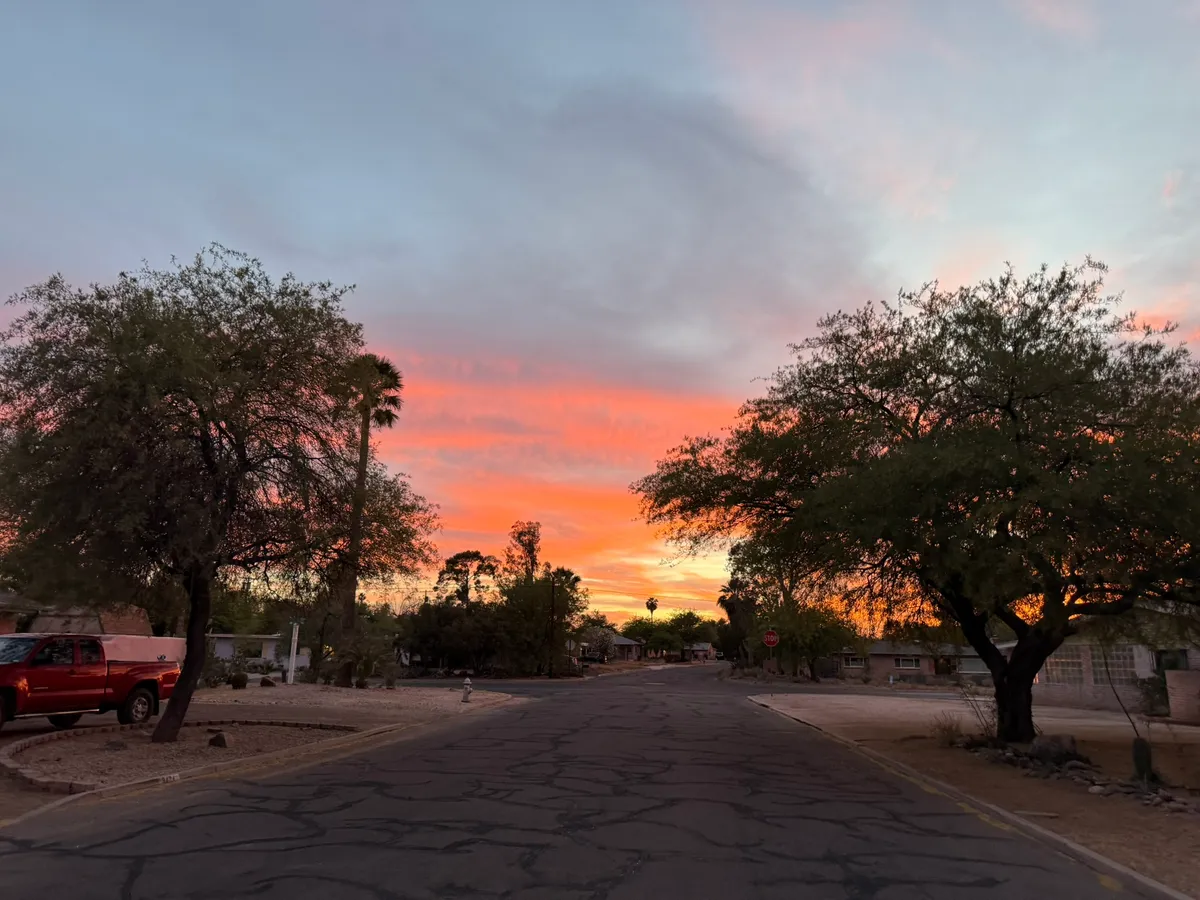
Nearly all the single-family area around Camino Miramonte was built as two subdivisions, the Encanto Park Addition (1947) and the Bunell Addition (1952). Both allowed only one-story single-family houses, set back at least 25 feet from the street. That’s why those blocks look so uniform.
The Neighborhood Plan describes them as 1950s horizontal ranch houses with significant mid-century historic characteristics, landscaped with desert natives mixed with date palms and other exotics of the era.
Two halves
Miramonte’s two halves were laid out differently. The western half follows 1930s subdivision patterns, with long, shallow, slightly curving blocks. In the eastern half the pattern switches abruptly to a full grid of large lots, where most of the apartments were built between 1950 and 1990.
The Benedictine Monastery
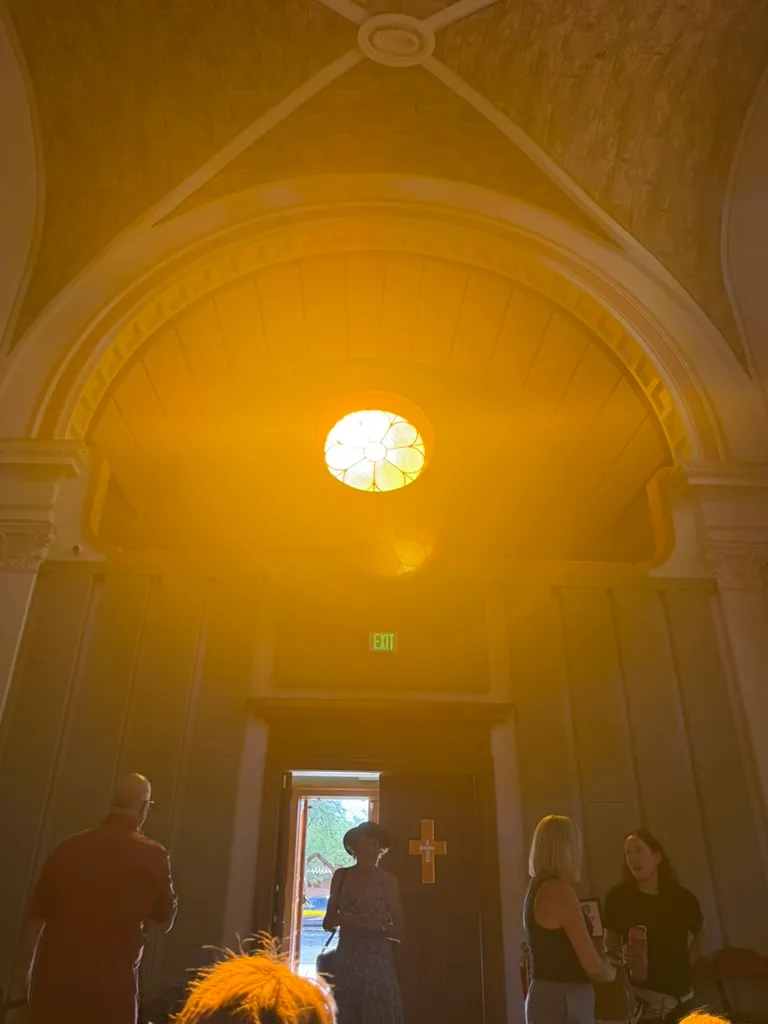
In 1935, Bishop Daniel Gercke invited the Benedictine Sisters of Perpetual Adoration, from Clyde, Missouri, to Tucson. They lived first in the Steinfeld Mansion downtown. They then bought the land on Country Club Road and hired Tucson architect Roy Place, who built on a concept by Josias Joesler and designed the building in Spanish Revival style.
Ground was broken on November 7, 1939. The cornerstone, quarried in the Santa Rita Mountains, was laid on April 21, 1940, and the building was blessed on December 15, 1940. A few details:
- The two-story building is shaped like an “E,” with the chapel in the north wing.
- “PAX” is carved in wood above the entrance.
- The mesquite confessionals came from Bishop Salpointe’s 1868 cathedral.
- The façade faces west and glows gold at sunset.
For nearly 80 years the sisters kept up perpetual adoration there, with prayer around the clock, surrounded by an orchard of Valencia oranges, date palms, avocado, peach, and pomegranate trees.
St. Mark’s
St. Mark’s Presbyterian Church on Third Street dates from the same decade as the monastery. The Neighborhood Plan calls for protecting both the church and the monastery as historic sites, and notes the community garden, basketball court, and open space the church shares with neighbors.
The Benedictine and La Rosa
In 2018 the last of the sisters returned to their motherhouse in Missouri, and Tucson developer Ross Rulney bought the property. For a time the empty building served as a shelter for migrant families, and some of the orchard trees were transplanted to Mission Garden, west of downtown.
After long negotiations with neighbors and preservation groups, the monastery and its chapel were kept, and three- to five-story apartment buildings went up around them. The project, called The Benedictine, added about 290 apartments, 37 of them inside the monastery, with storefronts along Country Club. It turned the west edge of the neighborhood from a quiet monastery and orchard into apartments with shops at street level.
Yellow Brick Coffee opened in one of those storefronts in March 2023 and has become the anchor of that stretch of Country Club. The Tucson roaster has collaborated with MNA.
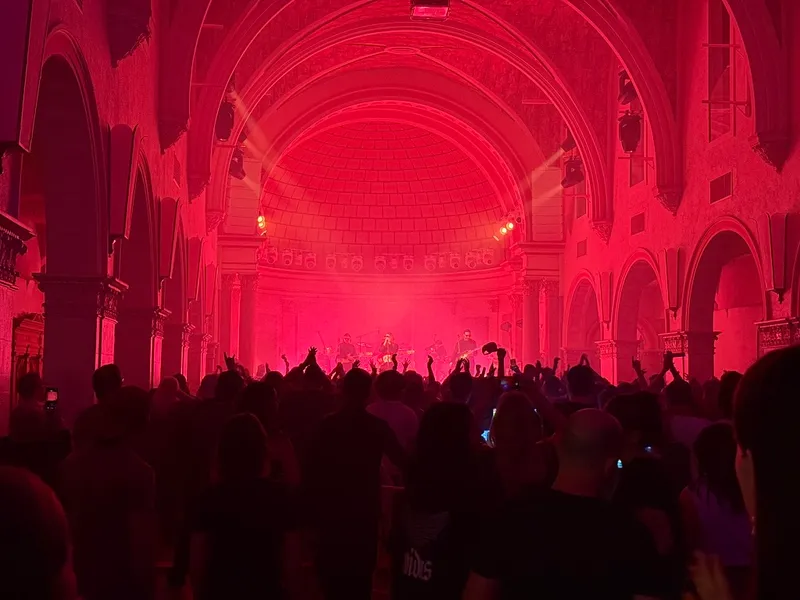
In October 2025, La Rosa opened in the old chapel as a music venue and community space, and the historic building welcomed the public again. It’s run by David Slutes, longtime entertainment director at Hotel Congress, and Charlie Levy, founder of Phoenix’s Crescent Ballroom. It has since hosted MNA board meetings and the Midtown Ice Cream Social.
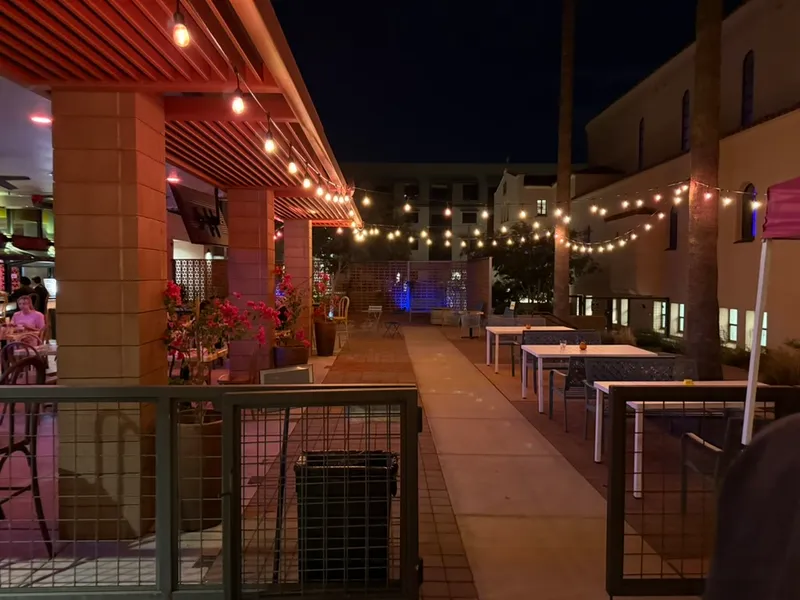
Next door, and connected to La Rosa, the same team built Sisters Restaurant & Bar where the citrus orchard once stood. It’s named for the women who tended those grounds for decades.
New life on Speedway
The Bashful Bandit was a biker bar at 3686 E. Speedway for more than 40 years before it closed in 2021. New owners reopened it in December 2023 as Bashful Bandit Barbecue, a Texas-style smokehouse. They kept the name and the old bar, carvings and all, and traded the rest for brisket.
Farther west, the Rancho Center, a 1950s shopping center that’s home to Whole Foods Market, was bought by local developer Larsen Baker in 2022 and has been extensively renovated. Its newest tenant is Miramonte, a restaurant named after the neighborhood that opened in September 2025. Its owners, the team behind Contigo and Locale, furnished it in mid-century modern style, with lots of teak, as a nod to the era when the neighborhood was built.
On foot and by bike
Whole Foods, Walgreens, coffee, and a growing list of restaurants are all a short walk away, and the Third Street bike route runs through the neighborhood to the University of Arizona. Miramonte might be the most walkable and bikeable neighborhood in Tucson.
What carries forward
Each era here has built on the one before instead of clearing it away. Camino Miramonte still curves along the old wash. The ranch houses still sit back from the street, as the 1947 and 1952 rules required. The monastery stands at the center of The Benedictine, and its chapel is open to the public again. On Speedway, the Bashful Bandit kept its name and its bar, and a new restaurant took the neighborhood’s name and the style of the years it was built.
None of that happened by chance. Neighbors negotiated for the monastery’s future, MNA has spoken for the neighborhood since 1992, and the 2008 Neighborhood Plan still guides its positions on land use.
Change will keep coming to Miramonte, and neighbors will keep shaping it, at board meetings, in our email group, and over the back fence. Nearly eighty years after the first ranch houses went up, the neighborhood is still growing into itself, and the next part of its story belongs to the people who live here now. Come to a meeting and help decide it.
Sources
- Miramonte Neighborhood Plan (2008)
- Benedictine Sanctuary of Perpetual Adoration
- Historic Tucson monastery sold
- Inside the monastery turned shelter for migrant families
- Some historic trees at Tucson’s Benedictine Monastery will be saved
- Benedictine Monastery Apartments
- All roads lead to Yellow Brick Coffee’s flagship cafe
- La Rosa opens at former Benedictine Monastery
- Sisters Restaurant & Bar: Sacred nights in midtown
- The Bashful Bandit is closing
- Bashful Bandit Barbecue
- Midtown’s Rancho Center getting new look, new businesses
- Miramonte brings mid-century modern comfort to midtown Tucson
Have old photos or stories?
We’d love to fill in more of Miramonte’s story, especially from longtime neighbors. Get in touch.